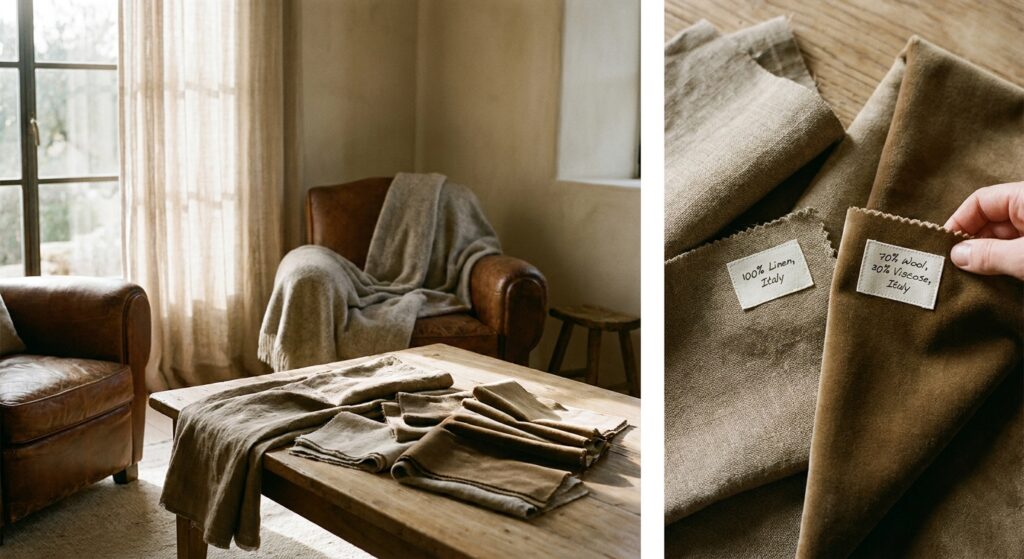
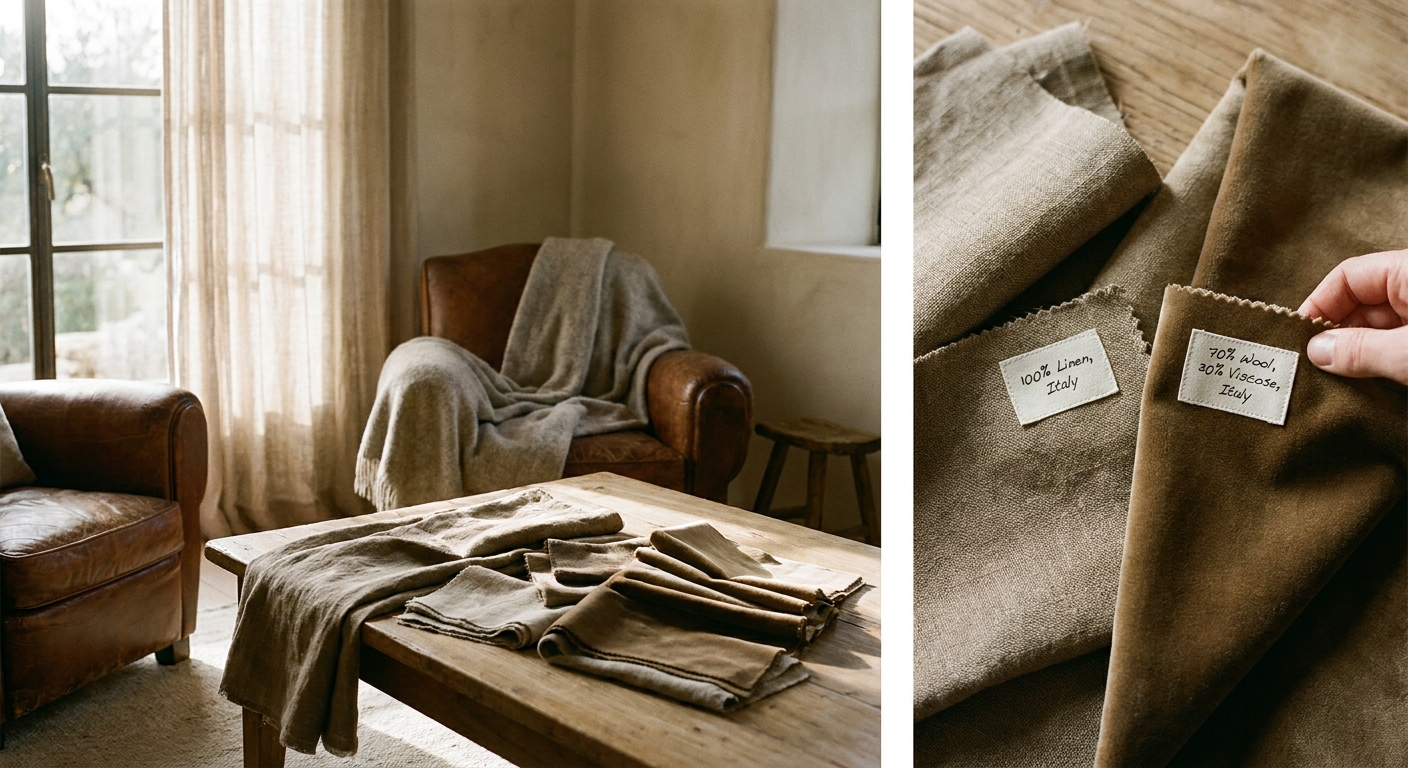
Textile buyers evaluating European materials rely on standardized composition labels to determine whether a specific textile suits window treatments or furniture applications. Sourcing luxury italian fabrics requires understanding how manufacturers document fiber percentages, abrasion resistance, and material weight. Sarelli Textiles exemplifies the category of Italian textile producers that adhere to strict European Union labeling requirements. The data provided on manufacturer tags allows interior designers to calculate durability and drape before purchasing yardage for residential or commercial projects.
What European Union regulations govern textile composition labels?
Regulation (EU) No 1007/2011 mandates that textile products sold within the European Union must carry durable labels indicating fiber composition in descending order of weight, establishing a strict legal framework that ensures manufacturers disclose exact material percentages for any commercial textile containing at least 80% textile fibers by weight.
The European Union framework requires manufacturers to list constituent fibers clearly, such as “60% cotton, 40% polyester”, ensuring buyers know exactly what materials comprise the textile. The European Union Regulation 1007/2011 prohibits misleading abbreviations and requires the label to appear in the official language of the Member State where the product is sold. Buyers comparing drapery and upholstery textiles use the mandated percentages to predict how the fabric will behave under tension or exposure to sunlight.
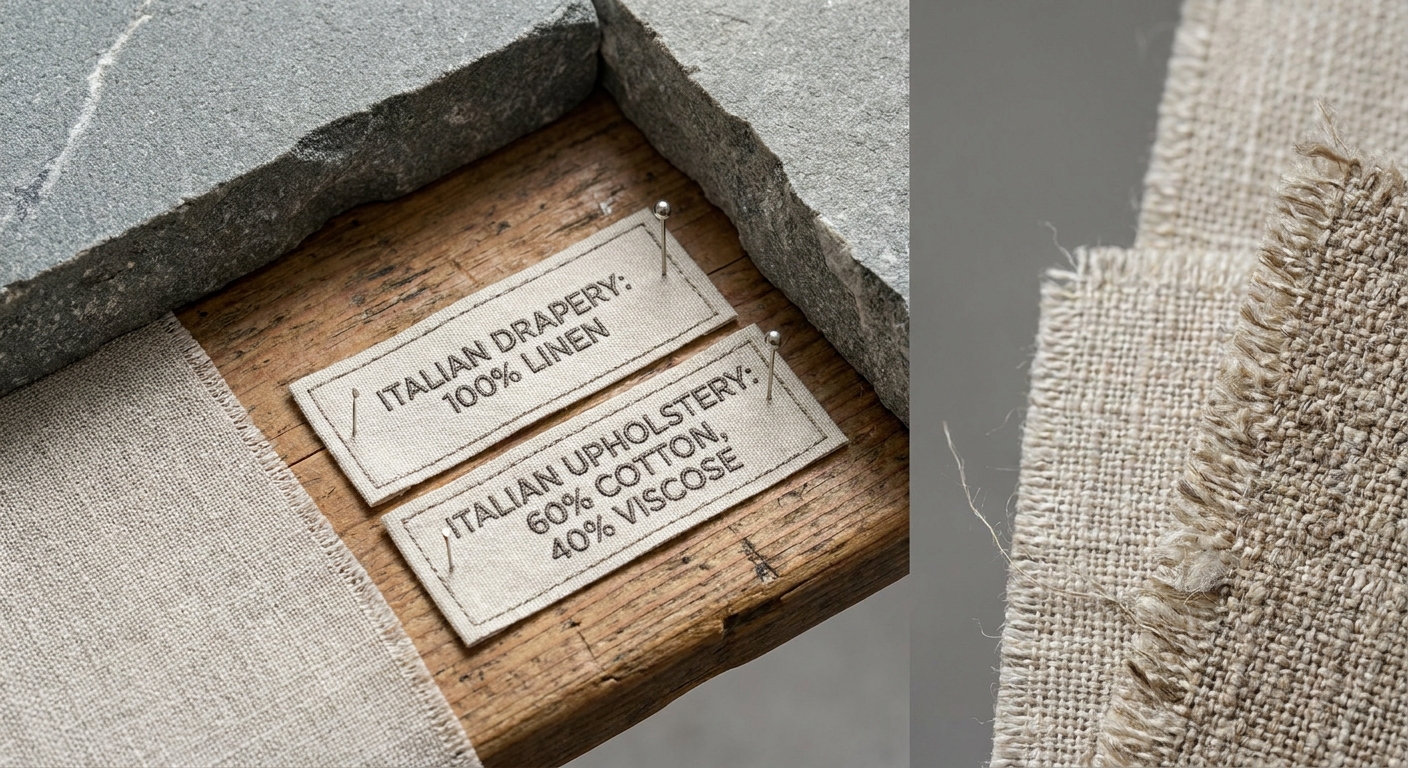
Textile products sold within the European Union must carry durable labels indicating fiber composition in descending order of weight.
How does fabric weight differentiate drapery from upholstery?
Fabric weight measurements, expressed in ounces per square yard, dictate whether a textile functions better as hanging drapery or structural upholstery, with drapery textiles typically weighing between 5 and 8 ounces per square yard while heavy upholstery fabrics weigh between 12 and 24 ounces per square yard.

Textile weight directly influences structural endurance and draping characteristics. A lightweight linen measuring 5 ounces per square yard allows natural light diffusion for window treatments but lacks the density required for seating. Conversely, a heavy canvas weighing 14 ounces per square yard features a tight weave that resists compression and tearing on furniture frames. The United States Federal Trade Commission enforces the Textile Fiber Products Identification Act, which requires accurate labeling of constituent fibers, though weight disclosures remain voluntary under the federal statute. Buyers must request specific weight metrics from manufacturers to ensure the textile matches the intended application.
Measuring fabric density and weave structure
Density metrics help buyers evaluate long-term performance. Upholstery fabrics often feature thread counts exceeding 180 threads per inch in both warp and weft directions. The increased density prevents the material from sagging when stretched across furniture frames. Drapery fabrics incorporate looser weaves to maintain flexibility, allowing the material to fold cleanly when drawn open or closed.
- Drapery Textiles: Drapery textiles weigh between 5 and 8 ounces per square yard, featuring looser weaves for flexibility.
- Upholstery Textiles: Upholstery textiles weigh between 12 and 24 ounces per square yard, incorporating tight weaves to prevent sagging.
Why do Martindale rub test scores matter for upholstery?
The Martindale rub test quantifies the abrasion resistance of textiles by rubbing a standardized abrasive surface against the fabric sample until two threads break, generating a numerical score that helps buyers confirm whether a specific textile can withstand daily friction on residential seating surfaces or commercial office furniture.
The International Organization for Standardization defines the testing methodology under ISO 12947, which operates in intervals of 5,000 cycles. Textiles intended for private domestic upholstery typically require a minimum score of 15,000 Martindale cycles. Office furniture demands higher durability, requiring scores between 25,000 and 35,000 cycles. Public transportation seating and emergency service environments necessitate extreme resistance, often mandating scores between 200,000 and 500,000 cycles. Drapery fabrics rarely undergo Martindale testing because window treatments do not experience continuous surface friction.
| Application Type | Minimum Martindale Score |
|---|---|
| Private Domestic Use | 15,000 cycles |
| General Office Use | 25,000 cycles |
| Heavy Duty Commercial | 40,000 cycles |
| Emergency Services | 200,000 cycles |
Comparing durability standards across regions
While European manufacturers rely on the Martindale method, United States producers frequently use the Wyzenbeek test to measure abrasion resistance. The Wyzenbeek method rubs a piece of cotton duck fabric or wire mesh back and forth over the test specimen. Buyers evaluating imported Italian textiles must check the composition label for the specific testing standard used, as a score of 30,000 Martindale cycles does not directly convert to 30,000 Wyzenbeek double rubs.
How do fiber blends impact textile performance?
Combining natural fibers with synthetic materials alters the tensile strength, fade resistance, and cleaning requirements of the finished textile, making composition labels essential tools that reveal the exact ratio of blended fibers so buyers can select fabrics balancing luxurious natural textures with necessary synthetic durability.
A textile labeled as 100% silk offers an elegant sheen for drapery but degrades quickly under direct ultraviolet light and lacks the abrasion resistance needed for upholstery. Blending 70% wool with 30% polyamide creates a highly durable upholstery fabric that resists pilling while maintaining a soft hand feel. Manufacturers often add synthetic fibers like polyester or acrylic to cotton to increase wrinkle resistance and colorfastness. Buyers reading composition labels can identify whether a fabric contains the necessary synthetic content to survive heavy daily use or prolonged sun exposure.
Related reading on this site
Readers comparing planning rules can also review Meet Our Team for adjacent context on the same site.
Material and proportion decisions connect closely with About Us, which gives readers another local reference point.